
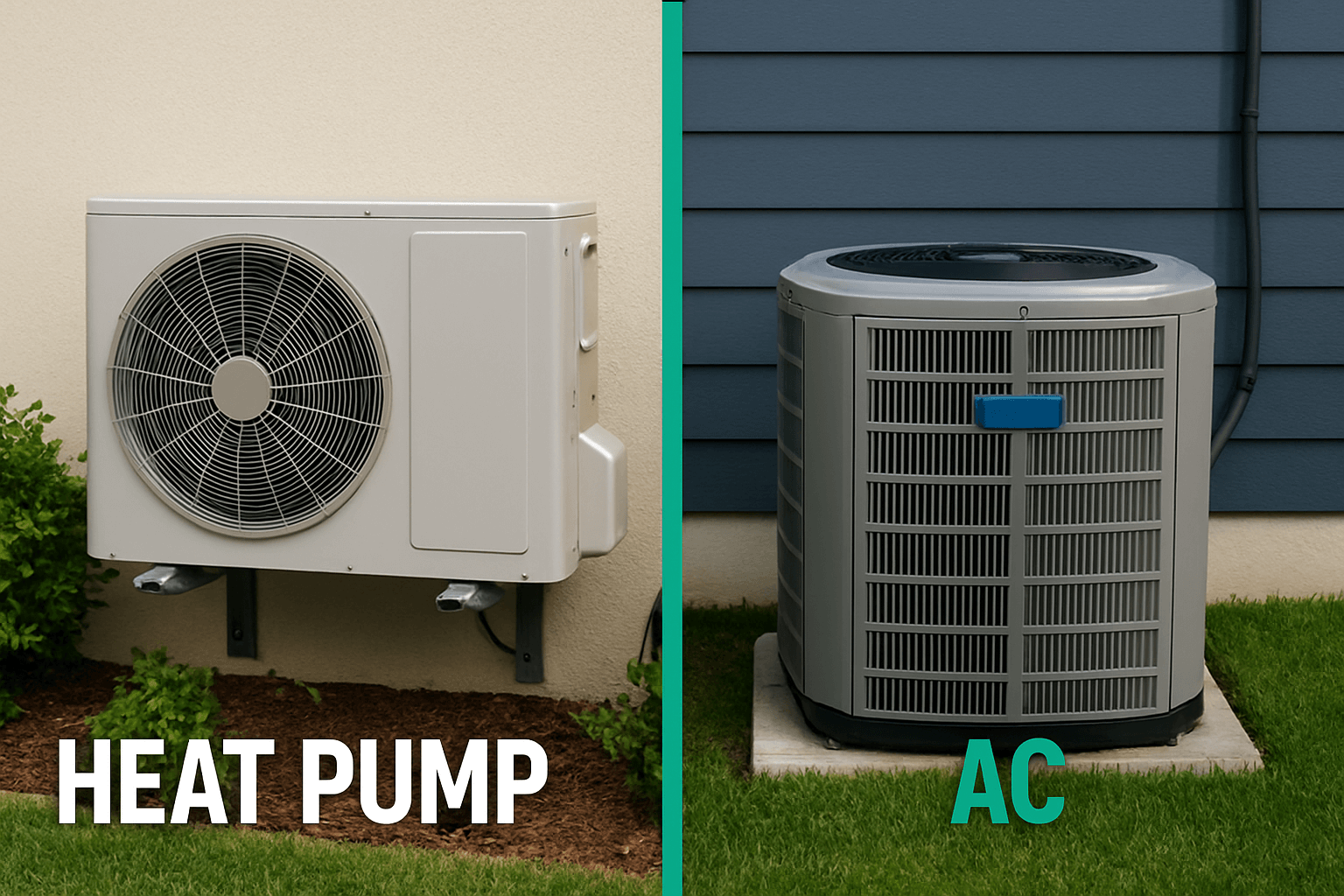
If you’re sweating through another SoCal summer or prepping for the occasional cold snap, you’ve probably asked yourself: Should I get a heat pump or stick with a traditional air conditioner? The answer is bigger than comfort—it’s about long-term energy savings, environmental impact, and even the value of your home.
Southern California’s mild winters and hot summers make it the perfect battleground for the heat pump vs. AC debate. Energy bills are only going one direction (spoiler: up), and every homeowner wants the best return on their investment. So, which system actually saves you more?
Jump To:
- TLDR – Quick Guide
- Detailed Breakdown
- Key Takeaways
- FAQs
- 1. Are heat pumps really more efficient than air conditioners in Southern California?
- 2. How much money can I save by switching to a heat pump?
- 3. Do heat pumps work well during cold SoCal nights?
- 4. What incentives are available for installing a heat pump?
- 5. Should I replace both my AC and furnace with a heat pump?
TLDR – Quick Guide
- Heat pumps both heat and cool your home, making them a two-for-one solution.
- AC units only provide cooling; for heat, you’ll need a separate furnace.
- In Southern California’s climate, heat pumps are typically more energy efficient overall, especially if you use electricity for heating.
- ACs are more efficient if you rarely need heat and just want powerful cooling.
- Choosing between the two depends on your budget, home size, and whether you need both heating and cooling.
- Heat pumps can save up to 50% on annual energy costs compared to electric furnaces, according to the U.S. Department of Energy (source).
Detailed Breakdown
1. How Each System Works
Air Conditioners (ACs):
- Purpose-built to cool indoor air.
- Removes heat from inside your home and pushes it outdoors.
- Typically paired with a separate furnace for heating.
Heat Pumps:
- Can cool and heat your home using the same technology, just in reverse.
- During summer, works like an AC; in winter, extracts heat from outside air (even when it’s chilly) and brings it indoors.
- No need for a separate furnace in most Southern California homes.
2. Energy Efficiency Faceoff
Cooling Mode
- Modern heat pumps and AC units are neck-and-neck in cooling efficiency when compared by SEER (Seasonal Energy Efficiency Ratio) ratings.
- The difference comes in winter. An AC needs a furnace to provide heat—often a gas or electric unit, which can be less efficient than a heat pump.
Heating Mode
- Heat pumps are up to 3x more efficient than electric resistance heating, since they move heat rather than generate it (Energy Star).
- In mild climates like SoCal, heat pumps don’t have to work hard to extract heat, making them incredibly efficient and cost-effective.
- According to the California Energy Commission, heat pumps can cut heating energy use by as much as 50% compared to traditional furnaces.
Real-World Example
A 2024 case study from Southern California Edison showed households that switched to heat pumps reduced their annual energy bills by 20-40%, depending on prior system efficiency and home insulation. That’s hundreds—sometimes thousands—of dollars back in your pocket each year.
3. Cost Considerations
- Upfront Costs: Heat pumps cost more to install than a standalone AC, but less than an AC + furnace package.
- Long-Term Savings: Lower monthly bills make heat pumps the better long-term investment for most SoCal homes—especially those all-electric or considering electrification.
- Rebates & Incentives: California homeowners can tap into rebates for heat pump installations (up to $3,000+) from utilities like SCE and state programs.
4. Maintenance & Lifespan
- Both systems require annual maintenance, filter changes, and professional inspections.
- Heat pumps have more moving parts but don’t suffer from the heavy wear-and-tear a gas furnace might, especially in SoCal’s climate.
- Expect 10-15 years of reliable service with proper care for both.
5. Environmental Impact
- Heat pumps are the clear winner for sustainability—no on-site combustion, fewer emissions, and a smaller carbon footprint, especially as the grid gets greener.
- AC + gas furnace systems contribute more to greenhouse gas emissions and air pollution.
6. When an AC Might Be Better
- If you only need cooling (say, a rental property or a rarely-used vacation home), a standalone AC is cheaper to buy and install.
- Homes already piped for natural gas and where gas is cheap may see less of a difference in annual cost, though this is changing as rates rise.
Key Takeaways
- Heat pumps offer significant energy efficiency advantages in Southern California, both for heating and cooling.
- If you want one system to handle both jobs and want to future-proof your home against rising energy costs, a heat pump is the smart play.
- Traditional ACs still have a place for homes that need powerful, affordable cooling only.
- Upfront investment in a heat pump pays off over time through lower bills and available rebates.
- Whichever you choose, annual maintenance is key to keeping your system efficient and your home comfortable.
FAQs
1. Are heat pumps really more efficient than air conditioners in Southern California?
Yes, especially for homes that need both heating and cooling. Heat pumps offer up to 50% better energy efficiency for heating compared to electric furnaces and rival AC units for cooling.
2. How much money can I save by switching to a heat pump?
Savings vary, but most homeowners see 20-40% reductions in annual energy bills. Your savings depend on your previous system, insulation, and usage habits.
3. Do heat pumps work well during cold SoCal nights?
Absolutely. Modern heat pumps can extract heat from the air even when it’s in the 40s or 50s, which covers the vast majority of Southern California winter nights.
4. What incentives are available for installing a heat pump?
Utilities like SCE and SoCalGas, as well as California state programs, offer rebates from $500 to $3,000+ for qualifying heat pump installations.
5. Should I replace both my AC and furnace with a heat pump?
In most cases, yes—especially if your current systems are more than 10-15 years old, inefficient, or costly to run. A heat pump can handle both jobs with less hassle and more efficiency.